Bubble Fun
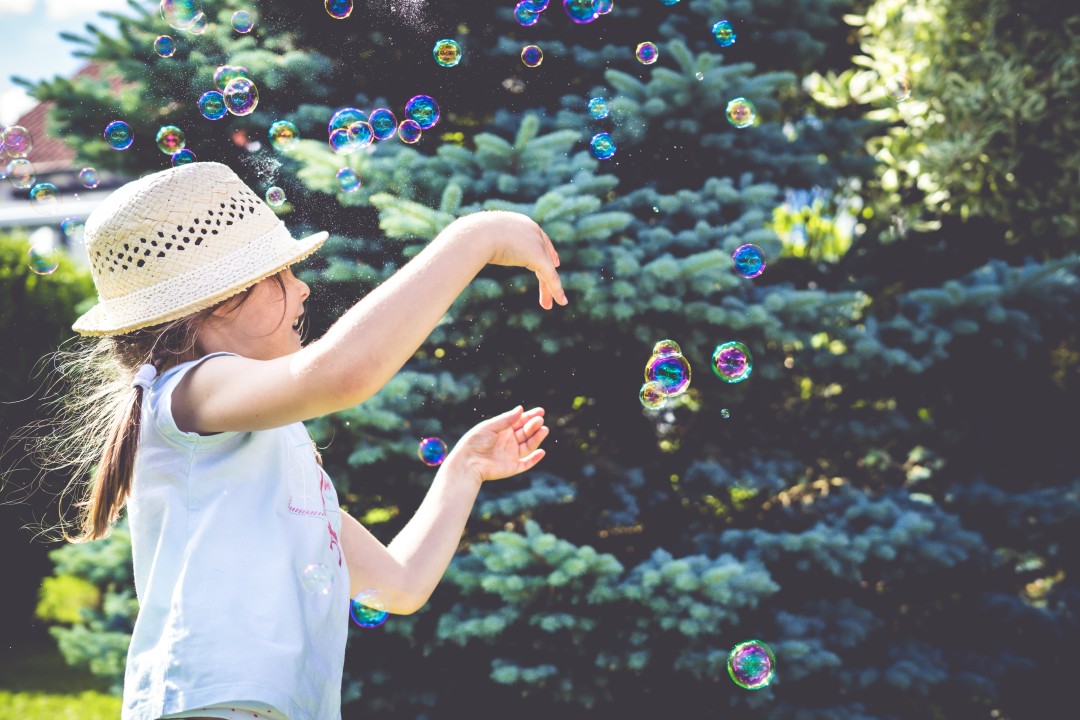
What is it about bubbles? Children and adults alike love to play with them. With a few small adjustments, a bubble game becomes an opportunity to have fun, connect with your child and boost their self-esteem — using the four dimensions of Theraplay®: Structure, Nurture, Engagement and Challenge.
Theraplay® is an intervention that focuses on enhancing the connection, trust and joy between a child and a parent.
— Vivien Norris and Dafna Lender (2020)
If you want to know more about Theraplay® in Northern Ireland, contact me at sarah@psychologicalpathways.com.
Some ideas for Bubble Fun
Here are some ideas for you to try — you may have your own favourites already. Opportunities for nurture arise naturally during the game: if they get hot, fan them to cool them down; have a celebratory hug or high-five — whatever your child is comfortable with. Notice their attempts and successes out loud.
Bubble Pop
Blow some bubbles and give a pre-arranged start prompt (see below) for everyone to start popping. (Structure)
Mix it up a bit — it's best to alternate exciting or up-regulating activities with calming or down-regulating ones. You can bring excitement or calm into the game using your voice, by limiting movement (e.g. doing alternate activities while standing, sitting or kneeling), and by prescribing the movement — walk like a robot, move like an astronaut, hop like a bunny.
- Pop with your hands
- Pop only with your head
- Pop with your elbows
- Pop with a specific finger — pointer finger, pinkie finger
- Give them another bubble wand and see if they can catch some bubbles
Blowing Bubble Art
You will need: bubble mixture, food colouring, a bowl, blank sheets of paper, and something to protect your table or floor wherever you'll be playing.
Place some bubble mixture in a bowl and add a little food colouring. Each person picks a straw. Tell them you'll let them know when to go (using a start prompt — see below); then everyone starts blowing into the bubbles, making them rise above the lip of the bowl. This is fun in itself — to take it to another level, place a sheet of paper on top of the bowl. When you peel the paper off, you'll have created a bubble picture together. You could even do a few different colours in different bowls and create some masterpieces. (Engagement)
Challenges
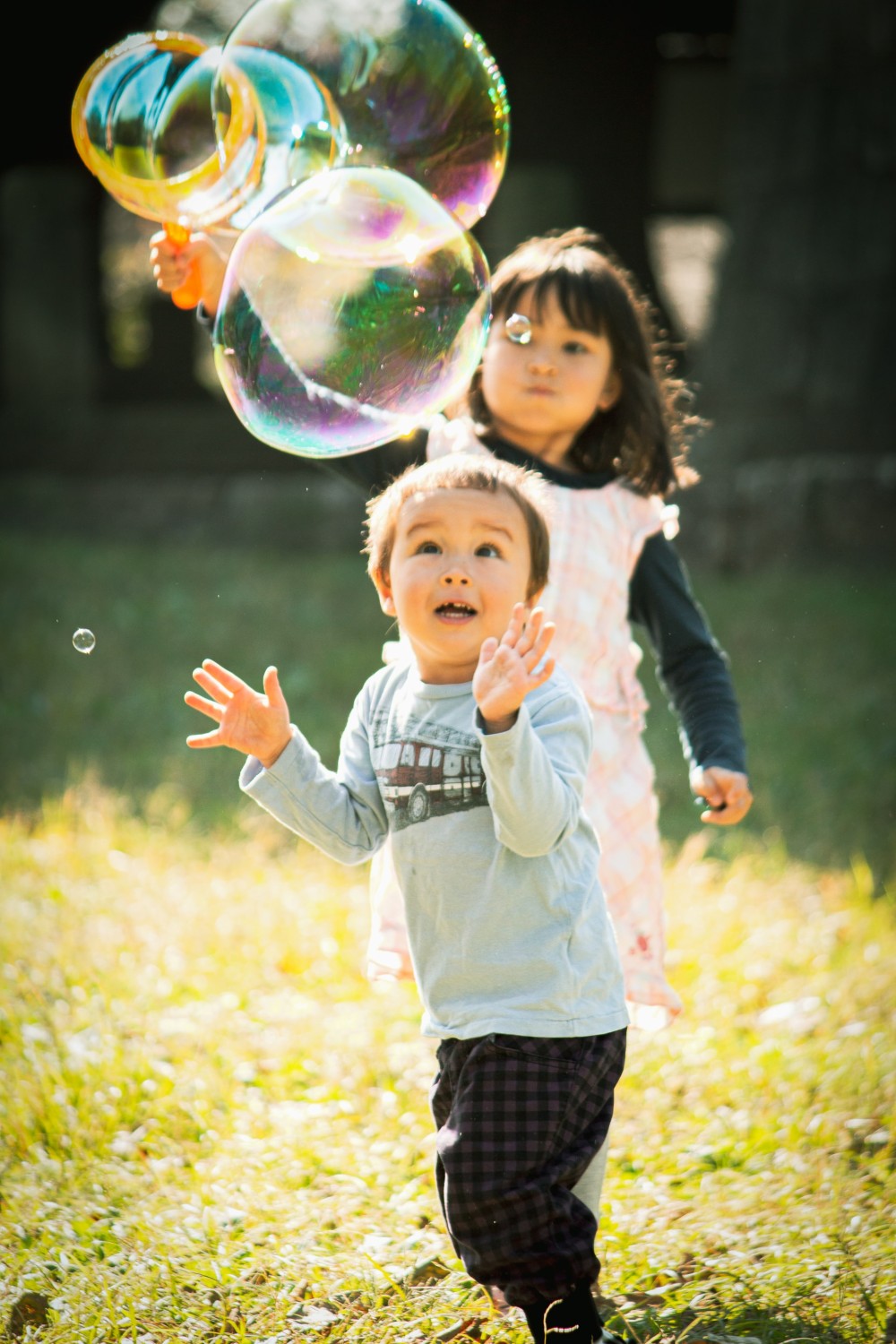
- See who can… blow the biggest bubble (everyone should have the same size wand), or blow the most bubbles with one breath.
- Keep your bubble in the air. Work together to keep your bubble floating by blowing it upwards. (Engagement / Challenge)
- Bubble race. Set up a start and finish line (not too far apart). Everyone stands at the start line. Blow some bubbles — each person picks one bubble and tries to blow it over the finish line. (Structure / Challenge)
NB: You'll need strong bubbles for this one to work. It doesn't have to be a race — managing to get the bubble over the finish line is an achievement in itself.
Start prompt ideas
Having a start prompt brings a little structure into every game — and as Norris and Lender (2020) put it, by introducing Structure "you are teaching the child predictability, safety and co-regulation."
- Count to three.
- Give a wink.
- "Ready, steady, go!"
- Tell the child they can go when you say banana — then say a few random words like apple, orange, elephant, BANANA! Always mix it up. If your child becomes excited easily, say the words softly and slowly. If not, be as animated as you like.
Want to explore further?
For further information, therapy or consultation, get in touch.
Originally published by Sarah Lewis on LinkedIn, 1 May 2020. With reference to Vivien Norris and Dafna Lender (2020).