Make an Emergency Box with your child for tough times
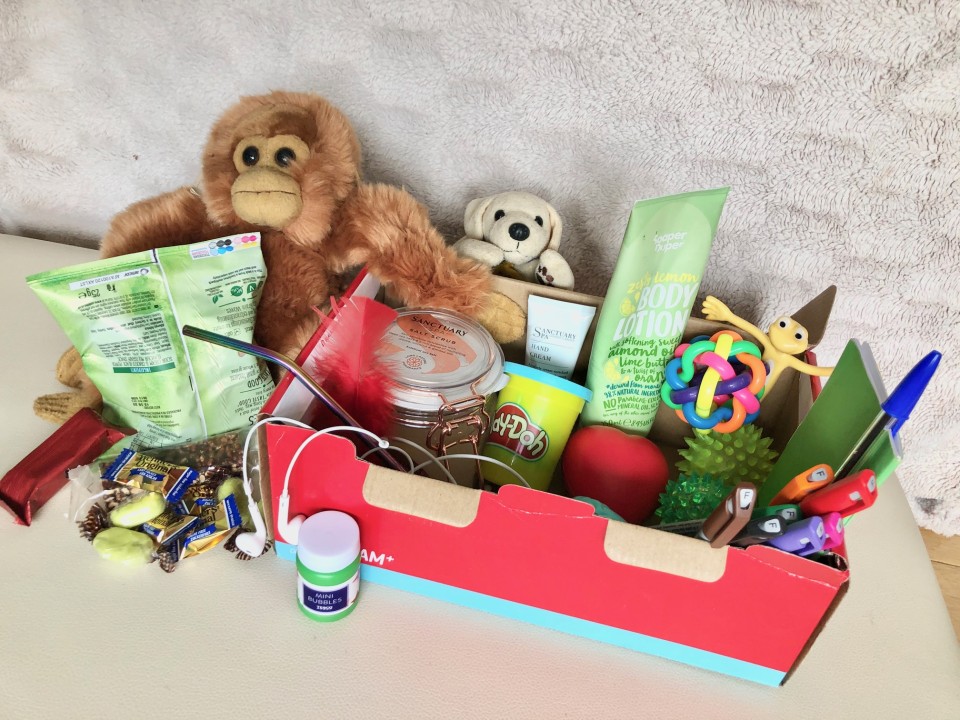
Whenever we are distressed or overwhelmed with a strong emotion, it can be really hard to think of things that might improve our mood. If you ask a young person who has had tough times to name ten coping skills that help them to feel calmer or safer, they may well struggle to do it.
I am a big advocate of the Emergency Box — a toolkit of different strategies that help to calm and soothe using the senses. I first heard of it when I was learning about DBT (Dialectical Behaviour Therapy). An internet search will turn up multiple different versions — emergency box, safety box, calm box, light box. The Enriched Environment described by Eadoin Bhreathnach in Sensory Attachment Intervention (SAI) goes further and focuses on making each room in the house a regulating space using the senses.
Create an Emergency Box / Toolkit
Gather prompts for things or activities that you know already work to improve your child's mood or help them feel better. A list of the senses is a great way to organise the task. I have put some prompts on my list to help young people think of things they have already used successfully.
Down one side of a sheet of paper, write a list of these headings: Sight, Sound, Smell, Taste, Touch and Thoughts. Help your child to think of things that are helpful for them to improve their mood or help them feel safer under each heading.
The following are suggestions — it's not an exhaustive list. Add your own. Some of these may work for your child and others may not. As long as the suggestion is safe and is going to improve your child's mood or help them to feel safer, anything goes.
Sight — what can I look at that improves my mood or helps me feel safer?
Photos of loved ones, plans for the future, beauty in nature, a favourite movie, reading a book, drawing, mindful colouring, crafting (sewing, knitting, crochet), FaceTime with family or friends, blowing bubbles, reading letters from people you love, inspirational quotes, counting things (e.g. the different colours in the pattern on the curtains), writing about how you're feeling, writing a letter to someone, mementos or gifts to remind you of happier times and how special you are.
Sound — what can I listen to that improves my mood or makes me feel safer?
Talking to someone safe, a phone call, a favourite soundtrack or music compilation (happy / sad / angry / chilled — something that matches your mood or improves it), sounds of nature, a podcast, clicking noises, white noise, ASMR (autonomous sensory meridian response — search on YouTube).
Smell — what can I smell that improves my mood and makes me feel safer?
The smell of home, a favourite scent / perfume / fabric conditioner, coffee (alerting), chocolate, crisps, a favourite dinner, home-cooked bread (calming), a turf fire, cut grass, orange zest (alerting), scents in nature — ocean, forest, flowers. There is a wide range of scents available in essential oils and candles for when it isn't possible to get the real thing.
Taste — what can I put in my mouth that helps me feel better?
A cold drink, cup of tea or coffee, yoghurt drink, milkshake, chewing gum. For more calming sensory feedback, suck the yoghurt drink or milkshake through a straw, or chew more than one piece of gum. A favourite food. Chewing and sucking can help us to calm and concentrate. Chewable pen tops and chewable jewellery are available for those who continually put things in their mouth. Sucky sweets, chocolate, liquorice or strawberry laces, wine gums. Crunch can be calming and soothing too — celery, apples, nuts, crisps.
Touch — what can I touch or hold that improves my mood and helps me to feel safer?
A hug from someone you love, wearing comfy clothes, lying in bed wrapped in your duvet, a fleece blanket or dressing gown around you, a weighted blanket (follow manufacturer's guidelines), holding a teddy, stroking a pet, giving or receiving a hand massage, a fidget toy or stress ball, playdoh, stroking your skin with a feather, washing your hands with a lovely hand soap or salt scrub, a bubble bath, asking someone to brush your hair, ripping up fabric or an old phone book, having a root through a rummage box, building some Lego. Get into a rhythm — a brisk walk, dancing, skipping, running, swimming, cleaning.
Thoughts — what can I think about to improve my mood or keep me safe?
Watching a favourite movie, listing goals I'm going to achieve in my life, drawing, mindful colouring, puzzles (jigsaw, word search, crossword, sudoku), reading a book, remembering happier times, writing out song lyrics that fit with your mood, playing a computer game, playing a board game with someone you like, reorganising your room, chatting with friends, writing a letter to yourself about why you want to keep going (do this when in a calm and regulated mood).
Putting the box together
Now that you have some ideas, try to think of ways to prompt each coping strategy. Some things can't physically go into the toolkit — you could put in a slip of paper for each strategy instead. Gather the prompts together in one place: an old shoe box, a bag, the drawer beside the bed — wherever is most helpful for your child.
It is a good idea to use this toolkit when feeling calm and emotionally regulated, so that it doesn't become a trigger for memories of the last time things were tough. (Have a look at the photo at the top of this article for an example of an Emergency Box.)
If you'd like help building one
Want to hear more or need some help in developing a coping skills Emergency Box with a young person you care for or work with? Get in touch.
Originally published by Sarah Lewis on LinkedIn, 16 May 2020. With reference to Dialectical Behaviour Therapy (DBT) and Eadoin Bhreathnach's Sensory Attachment Intervention (SAI).