Sensory strategies to improve your child's ability to settle to sleep

We all learn ways to change our arousal levels, to allow us to be at the right level for the task at hand. To ensure we are alert, we may take a hot or cool shower, drink a caffeinated drink, have something tangy, sour or spicy to eat, have a big stretch or chew gum. To feel more settled and down-regulated, we might take a warm bath, have a milky drink, read a book, listen to calming music or watch TV, in order to bring our arousal levels down in readiness for sleep.
Children and young people with a history of trauma and separation, or sensory processing difficulties, may struggle with sleep. They often cannot modulate their arousal levels to become calm enough to switch off. With the changes in routines since lockdown began, many children have a very different sleep experience.
Some nuggets of advice
Bedtime routines should generally start at least an hour before bed. When you are having problems settling your child, planning should start much earlier — in the morning. Get your child up at the same time every day, and put them to bed at roughly the same time every night, even at the weekends. No naps after 2pm.
Your child needs exercise to make them physically tired and emotionally regulated. This should be earlier in the day, and not within the hour before bedtime.
Figure out how much sleep your child needs, when they have to be up in the morning, and then work backwards to identify what time they should be settling to sleep at night. The Sleep Council has a useful chart showing the average amount of sleep needed at each age.
A consistent bedtime order
The bedtime routine should always be practised in the same order — whichever order suits best for you and your child. It should include:
- Dimming the lights — this helps the brain to produce melatonin (the sleep hormone)
- Calming activities such as colouring in, crafting, jigsaws, playing with playdoh in the hour before bed — no rough or exciting play; a warm bath is good
- Putting on PJs
- Supper
- Going to the toilet
- Brushing teeth
- Bedtime story (or reading, for an older child)
- Being tucked into bed
A note on drinks and toileting
Children who wet the bed at night should not have blackcurrant juice in the evening, as it stimulates urine production. If you encourage them to drink plenty of fluids earlier in the day, they will not be so dehydrated before bed and needing big drinks. They can be encouraged to go for a wee at the beginning of the bedtime routine and again as they are getting into bed, to try to ensure they start off the night with an empty bladder.
One direction of travel
A child should move towards the bedroom with you in their bedtime routine, and not return to living areas once they have left them for the night.
Screens and blue light
There is a night setting that turns off the blue light on most phones and tablets, and on some newer TVs. If your child uses a tablet in the evening, ensure that you have this setting turned on. It is better that a child isn't doing or watching something exciting and stimulating just before bed.
Sitting quietly and watching a familiar movie snuggled up to mum or dad is a lovely way to lead into the hour before bedtime — then turn screens off as you help your child settle. It may be easier for you to set a rule that there are never screens in the bedroom.
Sensory strategies to aid sleep
Sight
Is the room dark enough — or too dark — for your child? Do they need a blackout blind, or subtle lighting to help them to know where they are when they waken? You should aim to have the room in roughly the same state of darkness when they are going to sleep as it would be if they wake up during the night. It can be frightening for some children to waken in total darkness; more so if it was bright (or the landing light was on) when they went to sleep.
Bedrooms should be calm places at night, even if your child plays in their room during the day.
Lighting in the bedroom should be subtle for bedtime — and not bright white. A bright white light is on the blue end of the light spectrum and can hamper the production of melatonin. Once the light goes off, it can take the body 20 minutes to produce enough melatonin to be able to drift off to sleep.
Dim or gently twinkling lights may be better for your child. Twinkling lights can be mesmerising — they can help the child to emotionally regulate and settle to sleep.
Sound
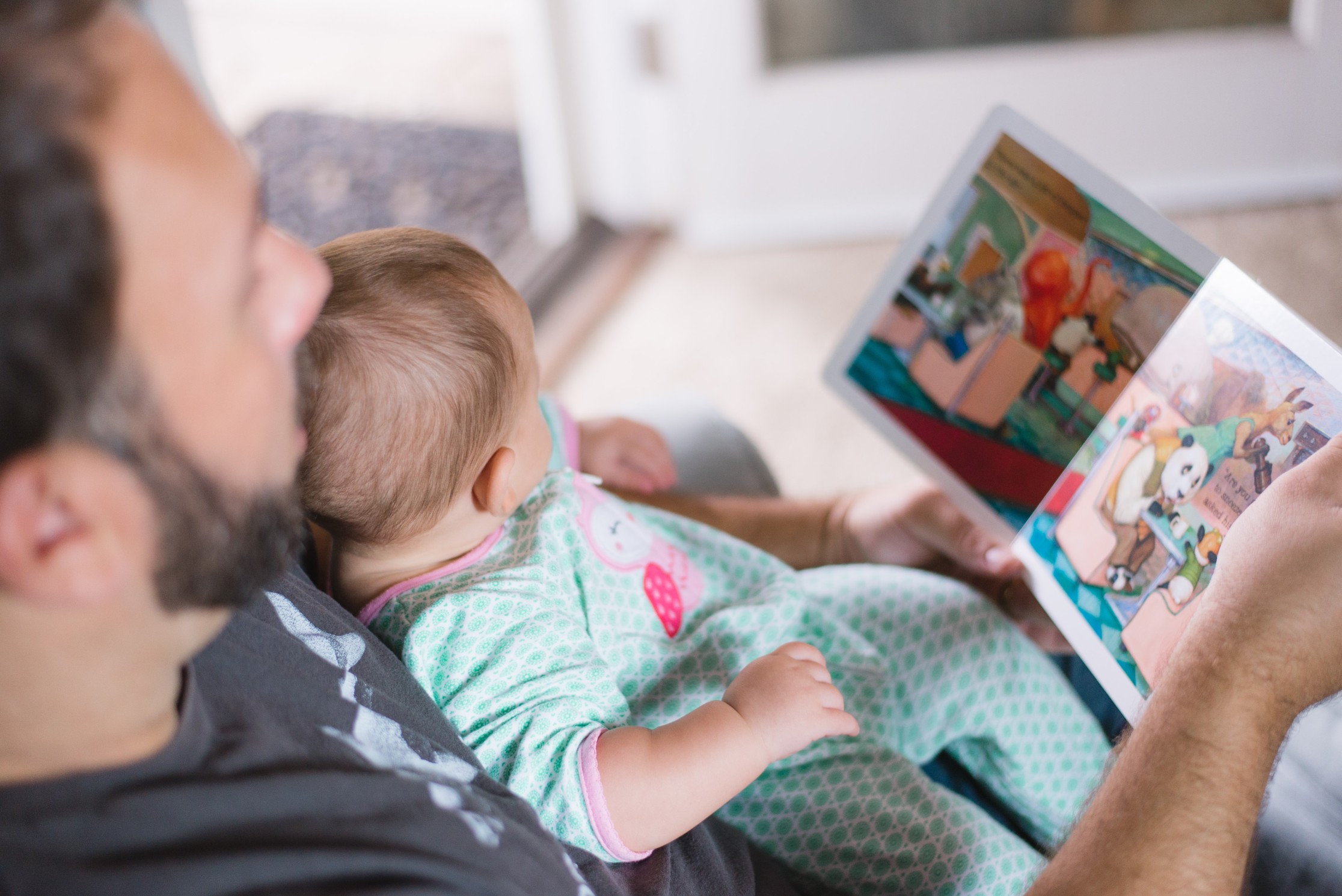
A bedtime story is an opportunity for you to help regulate your child using your voice. The gentle, steady and rhythmic sound of you reading a bedtime story is reassuring and calming. As you slow your pace a little and lower your voice, your child will start to settle.
Some children like gentle music playing as they go to sleep. Others like sounds of nature (you can get sound tracks of almost anything now), or white noise such as a ticking clock or electronic hum in the background. If you can, use a CD or download a track onto an iPod or similar device that doesn't have a screen. It would just blur the boundaries for your child to allow them to listen to music on your phone in their bedroom, but not play or watch things on it.
Avoid stimulating activities — video games, TV or films with high action and excitement, blue-screen devices such as tablets and mobile phones — for a minimum of an hour before sleep.
Smell
When we smell a familiar and comforting scent, it helps us to relax. Just using the same fabric conditioner or room scent can help us feel safe and secure. Some scents can help us settle to sleep or improve sleep quality — they include lavender, chamomile, jasmine, bergamot and rose. Pillow sprays can be helpful if this is something that you want to try. You can make your own (recipes online) or buy them ready made.
Taste
It is important that your child does not go to bed hungry or thirsty, as this could interrupt their sleep. Advice on the best food to have for supper varies, and so I believe it really depends on what your child likes and will eat. Sleep Scotland has tips on foods that contain tryptophan, which can make us sleepy. Supper should not be alerting, so no caffeine, low sugar and no citrus at bedtime. A warm milky drink at suppertime is soothing.
A water bottle with a pull-up top or in-built straw beside the bed will help cut out the trips downstairs again looking for a drink. It will also help cut down on spills. (Not all trips downstairs for a drink are about thirst — your child might be finding it hard to settle and is coming to see you again for comfort.)
Touch
Deep proprioception input can be very regulating. As parents, we do this naturally — bear hugs and tucking in. Tickling is alerting; if your child finds it hard to settle to sleep, tickling should not be part of the bedtime routine. Rocking motion can be very soothing — we do it instinctively with very young children. If your child is older, they may prefer to do this themselves on a rocking chair or an exercise ball. A cookie-dough roll (Bhreathnach, 2016) or ball massage with an exercise ball can give some squashing input.
Showering is alerting, so if possible encourage your child to have a calm warm bath. They can play in the bath — just not have exciting and alerting fun. Water play with floating toys and pouring water can be calming.
Settling to sleep can be anxiety-provoking, even though the child may not be aware that it is.
Children with high thresholds for moving, banging and crashing (vestibular and proprioceptive issues) tend to require movement in order to know where they are in the world. When lying down in bed, often in the dark, with a duvet (lighter than layers of blankets), children can struggle to achieve a full sense of their physical position — leading to them feeling anxious. If this is happening, it will reduce their ability to settle to sleep.
Children often seek to find a definite boundary for their bodies, to know where they are in space. A solid surface gives a cue to where the child is.
Bedding
Is it too light, or too heavy, for your child? A sheet tucked in over a light sleeping bag can be a way of providing a physical boundary for the child. If the sleeping bag is too loose, add a cuddly toy or small pillow inside the sleeping bag. For more weight, try adding a blanket over the duvet (or just blankets).
If you'd like to talk
For consultation, assessment and therapy please get in touch.
Originally published by Sarah Lewis on LinkedIn, 16 August 2020. With reference to Bhreathnach (2016).