Supporting a child through loss
As a society, we have experienced multiple losses in recent months. We can no longer go as we please, and many things that were ordinary everyday pleasures have become special treats.
We have age-old customs and traditions around death and bereavement — opportunities to help us celebrate the life of a loved one and process the loss of them from our lives. In recent months, limitations have been in place for connecting with each other in person — at home, in hospital or nursing home. Limitations have meant that visits to funeral parlours and attendance at funeral services have been restricted. In these circumstances, it is understandable that attendance at funerals would be prioritised for the adults over children. Many children — and adults — have missed out on the opportunity to say goodbye, to meet extended family and friends at a wake, and to be part of the ceremonial ending process of a funeral.
How children show us they are grieving
Children respond in different ways to loss. They let us know how they are feeling distress through their behaviour — such as:
- Seeking reassurance and nurture more than usual
- Reverting to much younger behaviours (e.g. back to thumb sucking, sitting on your knee, talking in a 'baby' voice)
- Complaining more of physical ailments (e.g. a sore tummy, minor bumps leading to meltdowns)
- Fighting more than usual with siblings
- Difficulty sleeping, unpleasant dreams
- And many more…
Children also miscue us — they can be having a really tough time and still seem to behave as usual much of the time. We might only know that times are tough for them when they seem to be acting out or challenging boundaries more than usual.
What can you do to support your child
Reassure your child
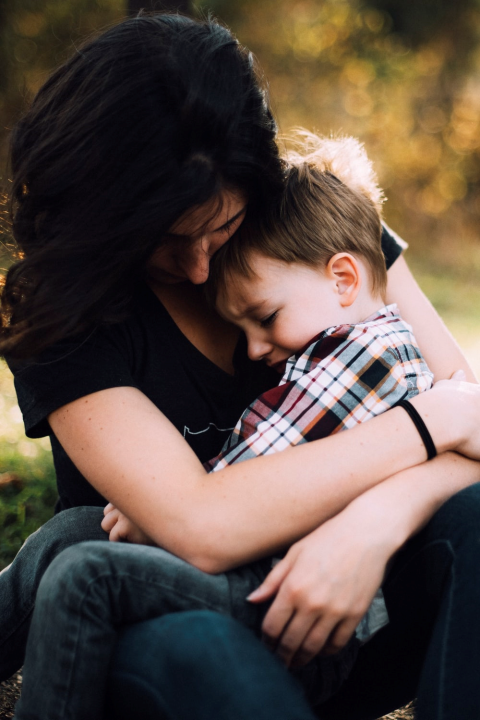
Reassure your child that they are very much loved, and that you are there for them if they want — an extra cuddle, an extra chat. You know that your child is adjusting to a big loss and so may need you more.
Talk with your child about the death
Use plain language that they can understand, and avoid vague terms such as lost or gone to sleep. The last thing they need is to worry that they will disappear if they go to sleep, or that they might also get lost and never come back.
It is OK to let your child see that you are sad too
Children learn from their parents and carers how to manage big feelings. If you are too distressed to talk in the moment, leave it for a little while and try again later. If you are overwhelmed, that can be frightening for a child and they may misunderstand what you are trying to tell them.
Keep the person's memory alive
Talk about them in normal conversation as opportunities arise naturally. Do special things too — some families like to reserve a space at the table on special occasions for them, others prefer to do something much more subtle. There is no right way.
Play together
Children often express strong emotions and process them through play — playing alongside them will give you an opportunity to gauge what is going on for them on that day.

Create a Memory Jar
A Memory Jar holds happy memories of the person who has died, written down to be re-read together. You can find out how to make one from the Rainbow Trust.
Helpful resources for children
Find some links and resources for children on the Hope Again website.
Things to remember
- Everyone navigates their loss in different ways. Some people feel up to speed again quickly and others are devastated for longer periods.
- There are different stages to bereavement, and they don't necessarily come in order or one by one. People can revisit the stages many times before they feel like their life is getting back on track.
- Don't forget the importance of your own self-care — and support for you.
If you'd like further support
For consultation and therapeutic input, please get in touch.
Originally published by Sarah Lewis on LinkedIn, 19 June 2020.